
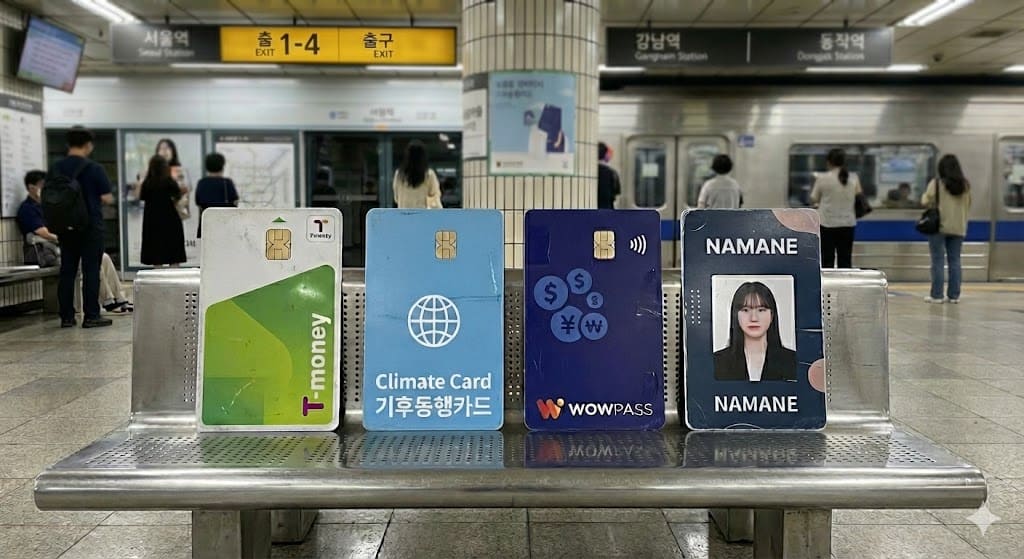
Seoul Transport Cards (2026): Which One Do You Actually Need?
Most people overthink this.
Somewhere between landing in Korea and tapping through subway gates for the first time, you realize there are four different transport cards — and suddenly you’re Googling “T-money vs WOWPASS” while jet-lagged.
I run tours in Seoul. I’ve watched hundreds of travelers freeze at this exact decision.
Here’s the simple version I give everyone before they fly.
Which Seoul transport card should I get?
One question decides it: what phone do you have?
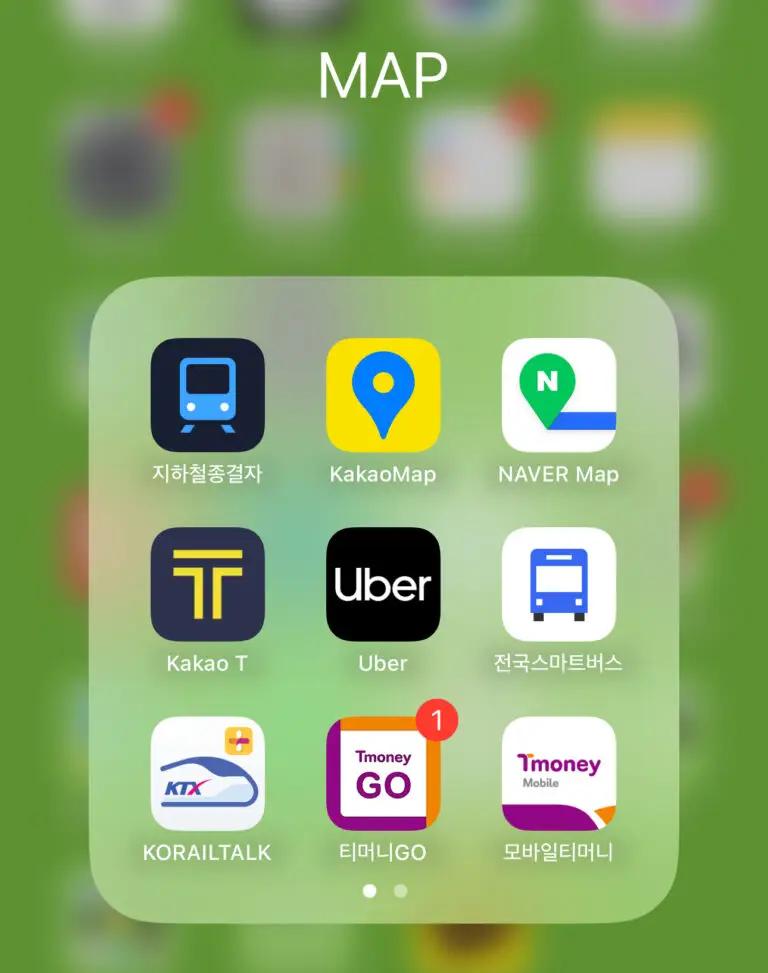
Android → Download the KOREA TOUR CARD Tmoney app before you fly. Top up with your foreign credit card in-app. No physical card needed. Fully cashless.
iPhone → Two options. Download the Mobile T-money app and add T-money to Apple Wallet — no physical card needed, just tap your phone. Or buy a physical T-money card at any convenience store for around ₩3,000. Either way, top-ups are cash only at convenience stores or subway machines.”
That’s it. 90% of travelers use T-money and never need anything else.
Where do I buy a transport card at Incheon Airport?
T-money (physical): Any convenience store on 1F arrivals — CU, GS25, 7-Eleven. Also available at B1 Transportation Center.
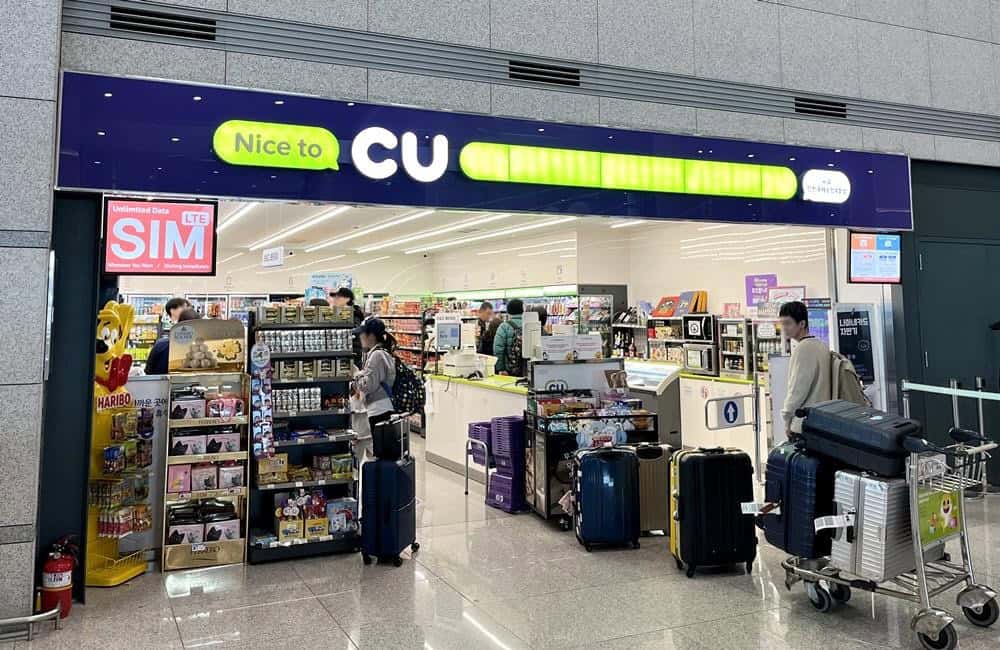
WOWPASS: CU stores at the airport. Pre-booking via WOWPASS app recommended.
NAMANE: CU stores at T1 Exits 2 and 13, select T2 locations, or NAMANE kiosks near AREX areas.
Climate Card: Not at the airport. Buy at any subway station customer center after you arrive in Seoul.
Need the full airport arrival breakdown? → How to Get from Incheon Airport to Seoul
Everything below is for specific situations.
What’s the difference between T-money, Climate Card, WOWPASS, and NAMANE?
T-money — The Default
T-money works nationwide — Seoul, Busan, Daegu, pretty much everywhere you’re likely to go. Subways, buses, some taxis, convenience stores. One card, whole country.
Available as physical card or app. Android users can top up with foreign cards via the KOREA TOUR CARD Tmoney app — fully cashless. iPhone users need cash for top-ups. Physical card costs ₩2,500–4,000.
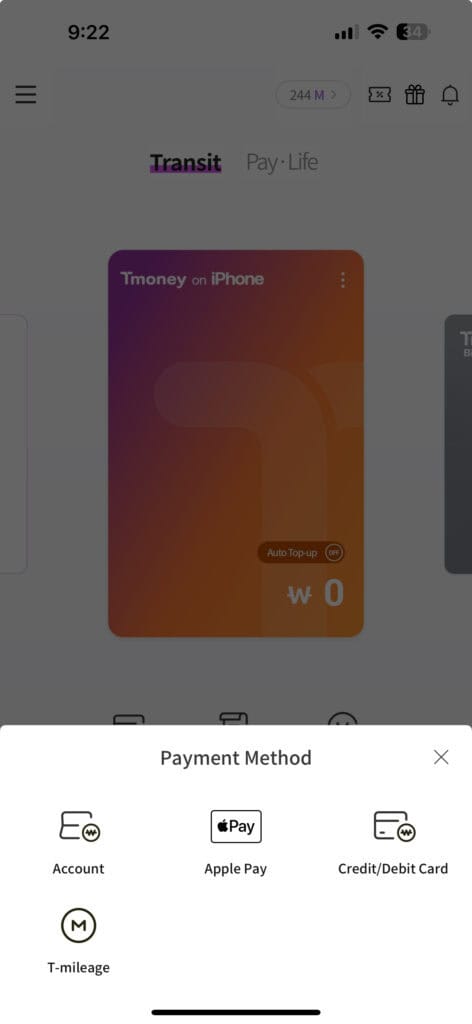
Most of my guests use T-money the whole trip and never think about it again. It works everywhere. Don’t overcomplicate it.
→ Full T-money setup guide coming soon
Climate Card — Unlimited Seoul Pass
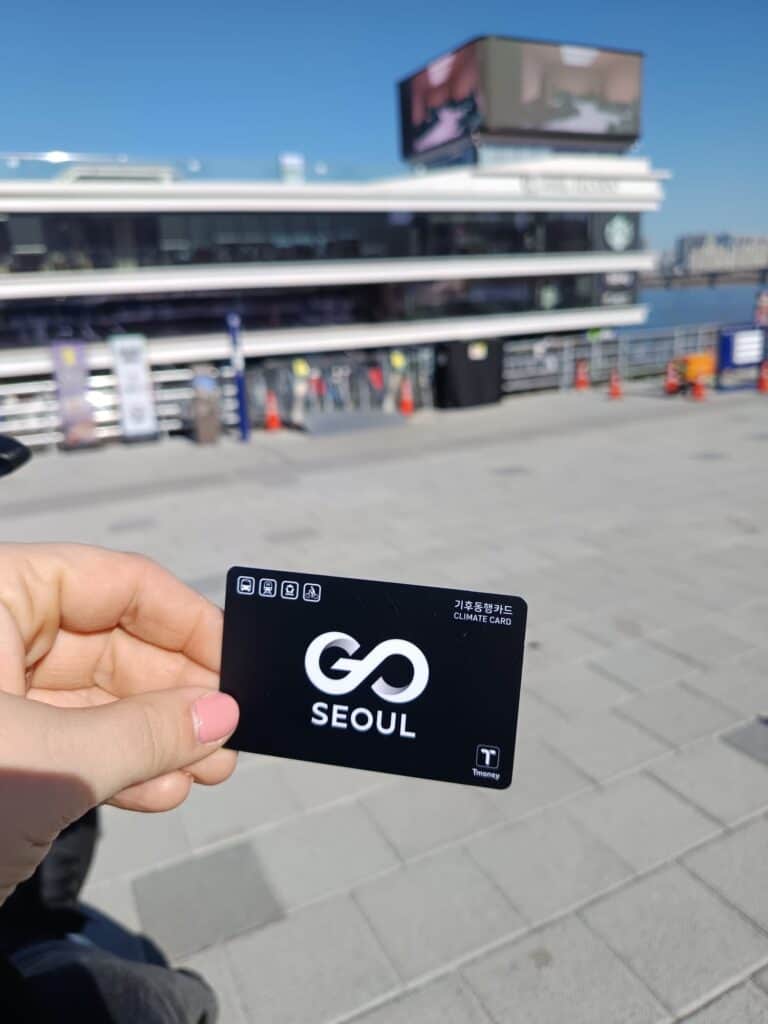
Unlimited subway and bus rides within Seoul for 1, 3, or 7 days. Seoul only — doesn’t cross city limits.
Is it worth it? Do the math first.
One subway ride costs ₩1,550–1,750. Three rides a day for three days = ₩13,950+. The 3-day Climate Card costs ₩10,000. That’s your break-even. If you’re moving across neighborhoods daily, it saves money and removes the mental load of checking your balance.
Passes: 1-day ₩5,000 / 2-day ₩8,000 / 3-day ₩10,000 / 5-day ₩15,000 / 7-day ₩20,000 (+ ₩3,000 physical card fee)
One thing most people get wrong: short-term passes (1–7 days) do not include Ttareungi (따릉이, Seoul Bike) or Hangang Bus (한강버스). Those are 30-day pass only. For a short trip, just buy them separately — Ttareungi via app, Hangang Bus on-site. Don’t upgrade your pass just for these. The math doesn’t work.
Available as physical card or app — Android and iPhone both.
⚠️ Not sold at Incheon Airport. Buy at any subway station customer center after you arrive in Seoul. → Full Climate Card guide coming soon
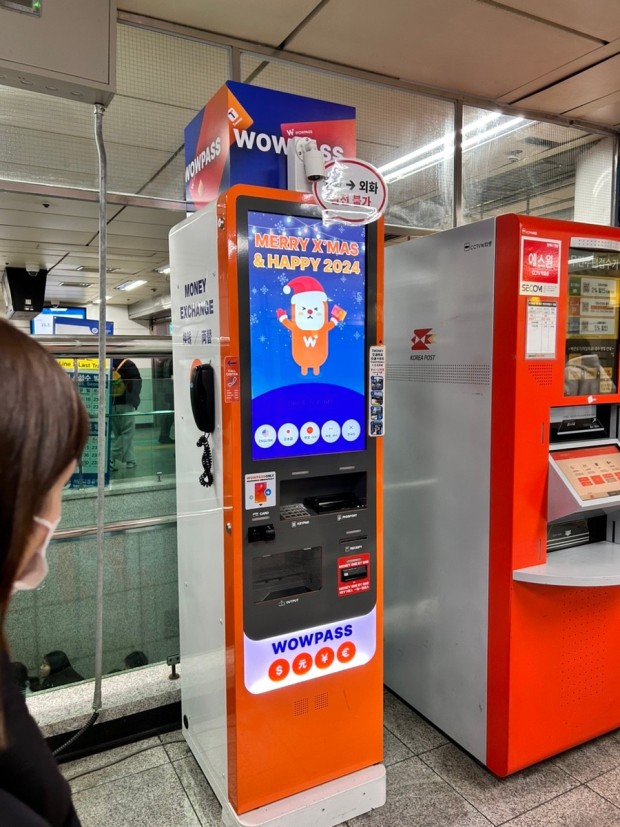
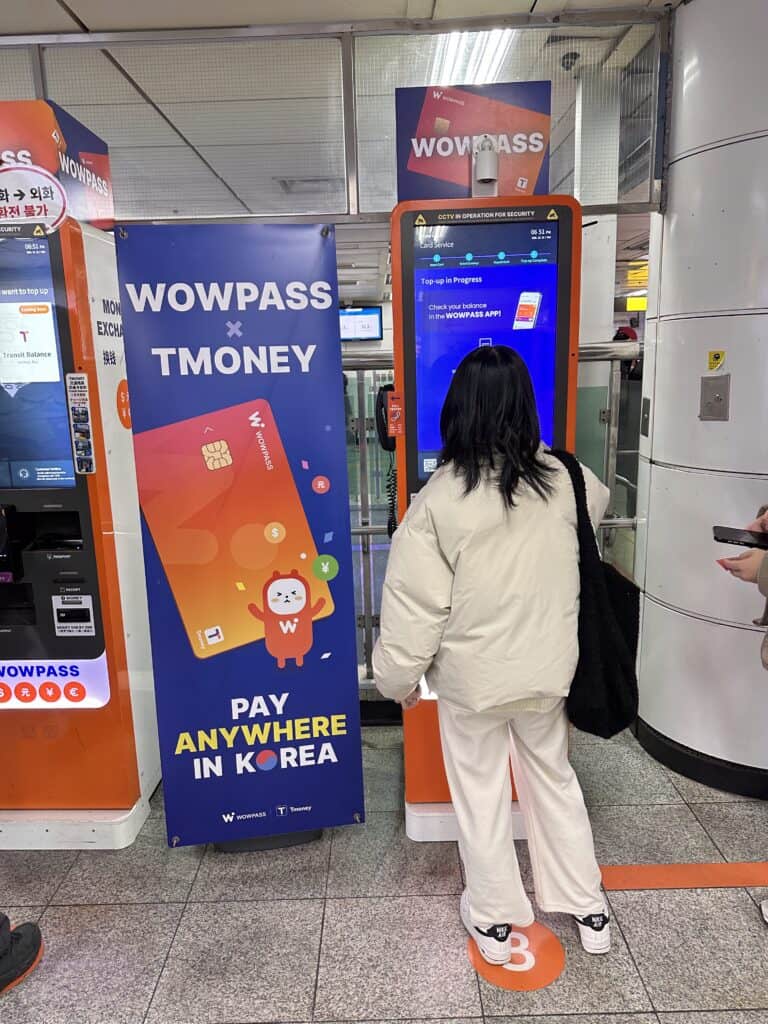
WOWPASS — For Easy Refunds
T-money transit plus prepaid shopping card plus currency exchange. Accepts 16 foreign currencies at kiosks. Clean cash withdrawal before you fly home.
Here’s what most people miss: WOWPASS has two completely separate wallets. Money you exchange goes into the shopping wallet. The transit wallet stays empty. You have to manually move money to the transit wallet before you can use it on the subway. Skip this step and you’ll be stuck at the gate wondering why your card isn’t working.
WOWPASS is solid — but only if you understand the wallet system before you arrive.
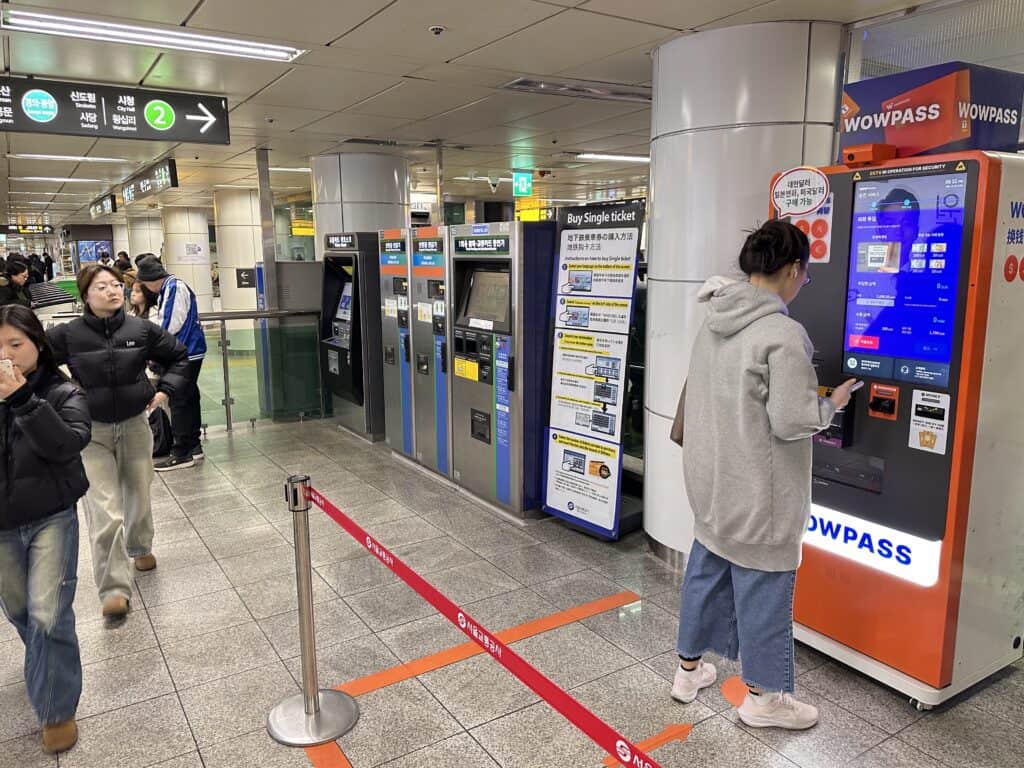
Available as physical card and app. Foreign credit card top-up works via app.
→ Full WOWPASS guide coming soon
NAMANE — For Families and Groups
Manage up to 4 cards in one app. Transfer balances between family members. Foreign credit card top-up via app. Customizable card designs — popular with K-pop fans.
Same two-wallet structure as WOWPASS. Move money to transit wallet before using on subway.
NAMANE makes sense if you’re managing kids or parents. Solo traveler or couple — stick with T-money. Simpler.
Available as physical card and app.
→ Full NAMANE guide coming soon
Other cards you might see
TTC+ (T-Money Travel Card Plus): Launched December 2025. Combines T-money transit with WOWPASS currency exchange. Still very new — ask at the convenience store if they have it. If they do, worth trying. If instructions feel unclear, stick with regular T-money.
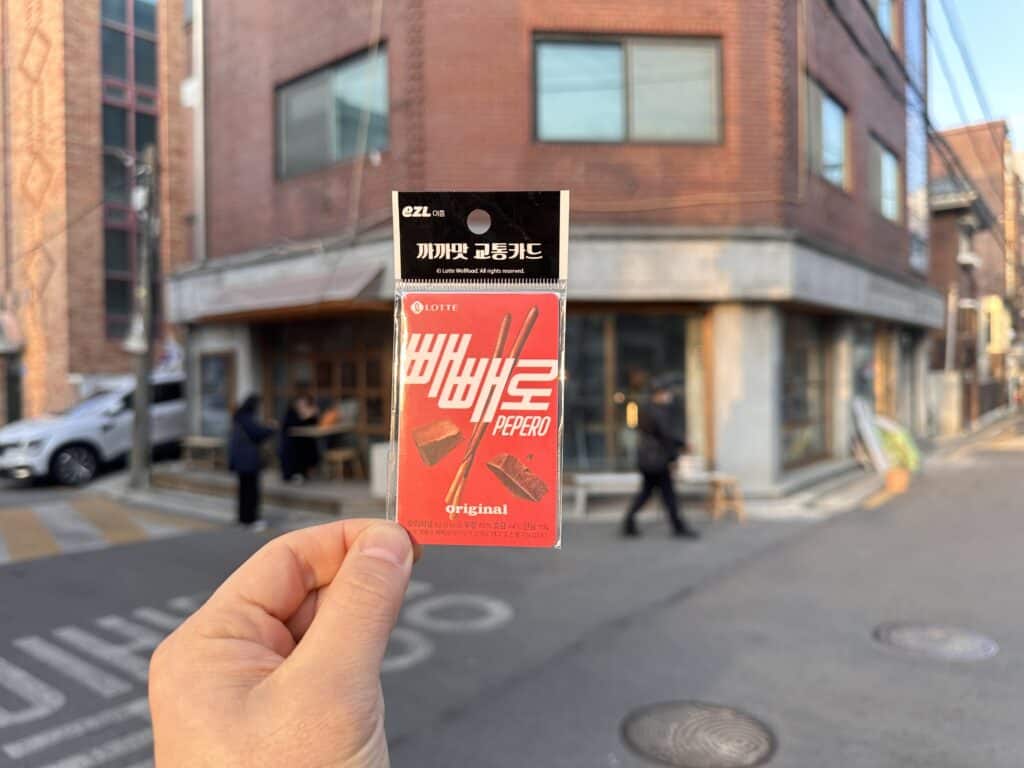
EZL Card: Works exactly like T-money for transit. Sometimes handed out at airport convenience stores instead of T-money. Don’t worry if you get one — tap and ride, same thing. Has occasional Lotte shopping discounts.
Korea Travel Card: Worth knowing about. Issued by Woori Bank, runs on the Hana Card network — works on iOS and Android both. Pick it up at Woori Bank counter in Incheon Airport on arrival. Transit nationwide, payments at 2 million+ merchants, cash withdrawal at 3,700+ Woori Bank ATMs, and up to 70% exchange rate discount at the bank. Top up at CU convenience stores, kiosks, or via app. If you want one card that does everything — transit, payments, currency exchange, ATM — this is the cleanest option. Other bank cards (Shinhan, Hana) exist too, but Korea Travel Card is the most tourist-friendly setup right now.
Is T-money better than WOWPASS?
Which transport card is best for first-time visitors to Seoul?
T-money. Android users get the KOREA TOUR CARD Tmoney app — foreign cards work in-app, fully cashless. iPhone users buy the physical card. 90% of travelers never need anything else.
Can I reload T-money with a credit card?
No. T-money top-ups are cash only at convenience stores and subway machines. The exception is the Android KOREA TOUR CARD Tmoney app, which accepts foreign cards. iPhone users need Korean won cash.
Does the Climate Card work outside Seoul?
No. Seoul only. If you’re going to Busan, Daegu, or anywhere outside Seoul, use T-money. Climate Card won’t work.
Is the Climate Card worth it for tourists?
Yes, if you’re taking 3+ rides daily for 3+ days. One ride costs ₩1,400–1,500. Three rides × three days = ₩12,600+. The 3-day pass costs ₩10,000. Do the math for your trip before you buy.
What’s the difference between WOWPASS and NAMANE?
WOWPASS is better for currency exchange and easy refunds — cash withdrawal at kiosks, ₩1,000 fee. NAMANE is better for families managing multiple cards in one app. Both work on transit nationwide. Both have separate transit and shopping wallets — move money to the transit wallet manually before using the subway.
Just landed and figuring out how to get from the airport? How to Get from Incheon Airport to Seoul covers everything — AREX, bus, taxi, and what to do first when you arrive.
Once your card is sorted, Seoul becomes easy.
First time here and not sure where to start — Seoul Local Day is where I’d begin.

This is quite a nice article. (Test)
Well written article with lots of helpful information. Thank you!
Thank you! I wrote it to help travelers coming to Seoul feel less overwhelmed.